Pediatric Vision Therapy vs. Standard Glasses: What to Expect from a Functional Vision Exam in Annapolis
When a child has trouble seeing clearly, standard glasses may be an important part of the solution. However, clear eyesight is only one part of how the visual system works. Vision is more than 20/20. Some children can see clearly and still struggle with eye tracking, focusing, eye teaming, visual processing, or other skills needed for reading, learning, and everyday activities. Because a typical school vision screening primarily checks how clearly a child sees at a distance, many of these children pass their screening and continue to struggle in the classroom. At The Center for Vision Development in Annapolis, we take a closer look at how a child's visual system functions through a comprehensive functional vision exam.
What Do Standard Glasses Correct?
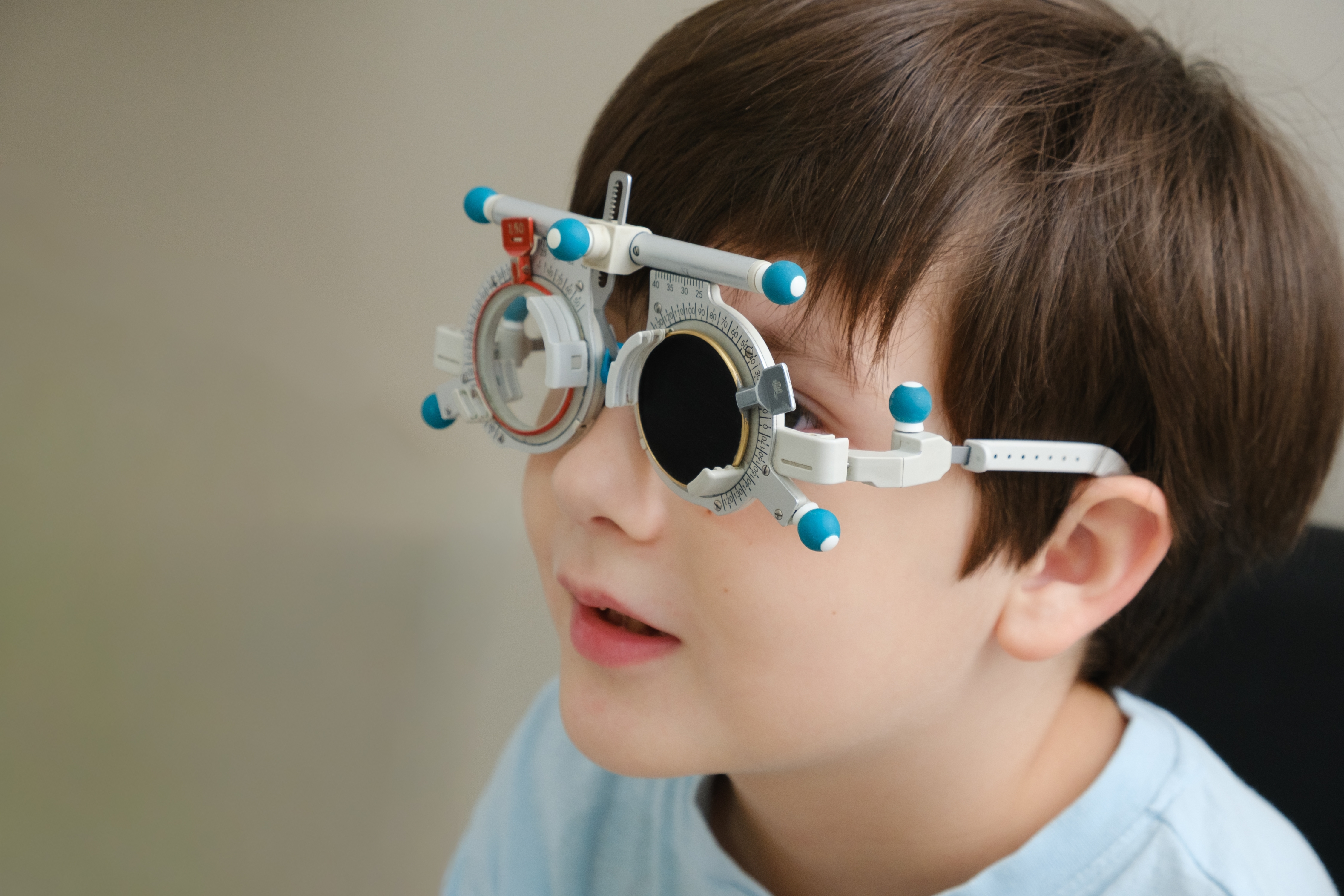
Traditional eyeglasses are primarily designed to correct refractive errors such as nearsightedness (difficulty seeing objects far away), farsightedness (extra effort needed to see clearly up close), and astigmatism (blurred or distorted vision caused by the shape of the front of the eye). By changing how light focuses on the retina, prescription lenses can improve visual clarity.
For many children, glasses provide exactly the correction they need. For others, clearer eyesight may not fully address difficulties involving how the eyes work together or how visual information is processed. A child can have an accurate prescription and still lose their place while reading, because the eyes are not moving or working together efficiently.
What Is a Functional Vision Exam?
A functional vision exam goes beyond checking whether your child can read letters on an eye chart. We evaluate how efficiently the visual system performs during tasks that require sustained attention, movement, reading, and coordination.
Depending on your child's needs, testing may assess areas such as:
· Eye tracking (the ability to move the eyes smoothly and accurately across a line of text)
· Eye teaming and binocular coordination (how well the two eyes aim at the same point together)
· Focusing ability and flexibility (holding focus during reading and shifting focus quickly between the board and the desk)
· Visual-spatial and perceptual skills (understanding where objects are in space and making sense of what is seen, such as telling a "b" from a "d")
· Visual performance related to reading and classroom activities
These skills can be especially important for children who experience headaches, eye fatigue, losing their place while reading, skipping words or lines, difficulty copying from the board, double vision, or challenges maintaining attention during close work. When these skills are not working efficiently, a child often has to work much harder than classmates to read and write, and that extra effort can look like a lack of attention or motivation.
What to Expect During a Functional Vision Evaluation in Annapolis
Our evaluation process is designed to give us a detailed understanding of your child's visual system. The initial appointment includes an in-depth examination, and additional testing may be used to evaluate the visual performance skills needed for school and other daily activities.
After testing is complete, we review the findings with parents and explain whether treatment or other support may be appropriate. We explain what each finding means and how it connects to what you are seeing at home and in the classroom. Recommendations are based on the individual child rather than a one-size-fits-all approach. When appropriate, we also provide a written report that can be shared with your child's school to support classroom accommodations through an IEP or 504 Plan.
How Pediatric Vision Therapy Is Different
Pediatric vision therapy is not simply another type of eyeglass prescription. It is an individualized program of supervised activities designed to develop specific visual skills that may not be adequately addressed by glasses alone.
When vision therapy is recommended, our programs may include structured in-office exercises along with activities performed at home between appointments. The specific plan depends on the visual skills identified during the evaluation. Many of our activities are designed to feel like games, so children stay engaged while they build the visual skills that reading and learning depend on. As these skills improve through the program, many children are able to read more comfortably, work more independently, and approach schoolwork with greater confidence.
Glasses and vision therapy can also serve different purposes and may sometimes be used together. The goal is to determine what your child actually needs based on comprehensive testing.
A Personal Note from Dr. Kungle
I grew up with a lazy eye that was not diagnosed or treated until I was 16 years old. By then, I had spent my entire childhood compensating for a visual system that was not working the way it should. That experience is a large part of why I believe every child who is struggling deserves a thorough look at how their eyes actually function, as early as possible.
Schedule a Functional Vision Exam
If your child is struggling with reading, visual discomfort, eye coordination, or other vision-related challenges, a functional vision exam with The Center for Vision Development is a good place to start. To schedule an evaluation, or to ask whether vision may be playing a role in your child's challenges, please call our Annapolis office at (410) 268-4393. Our team is happy to answer your questions.
Quick Links

Patient Center
Learn More
Keep
In Touch


Treatments
Contact Info
Hours of Operation
- Monday 10:00am – 6:00pm
- Tuesday 8:00am – 6:00pm
- Wednesday 8:00am – 6:00pm
- Thursday 8:00am – 6:00pm
- Friday 10:00am - 4:00pm
- Saturday 8:00am – 4:00pm
- Sunday Closed
© 2026 The Center for Vision Development. All rights Reserved. Accessibility Statement - Privacy Policy - Sitemap
Powered by: