Fall Youth Sports in MD: How Vision Therapy Can Improve Hand-Eye Coordination & Depth Perception
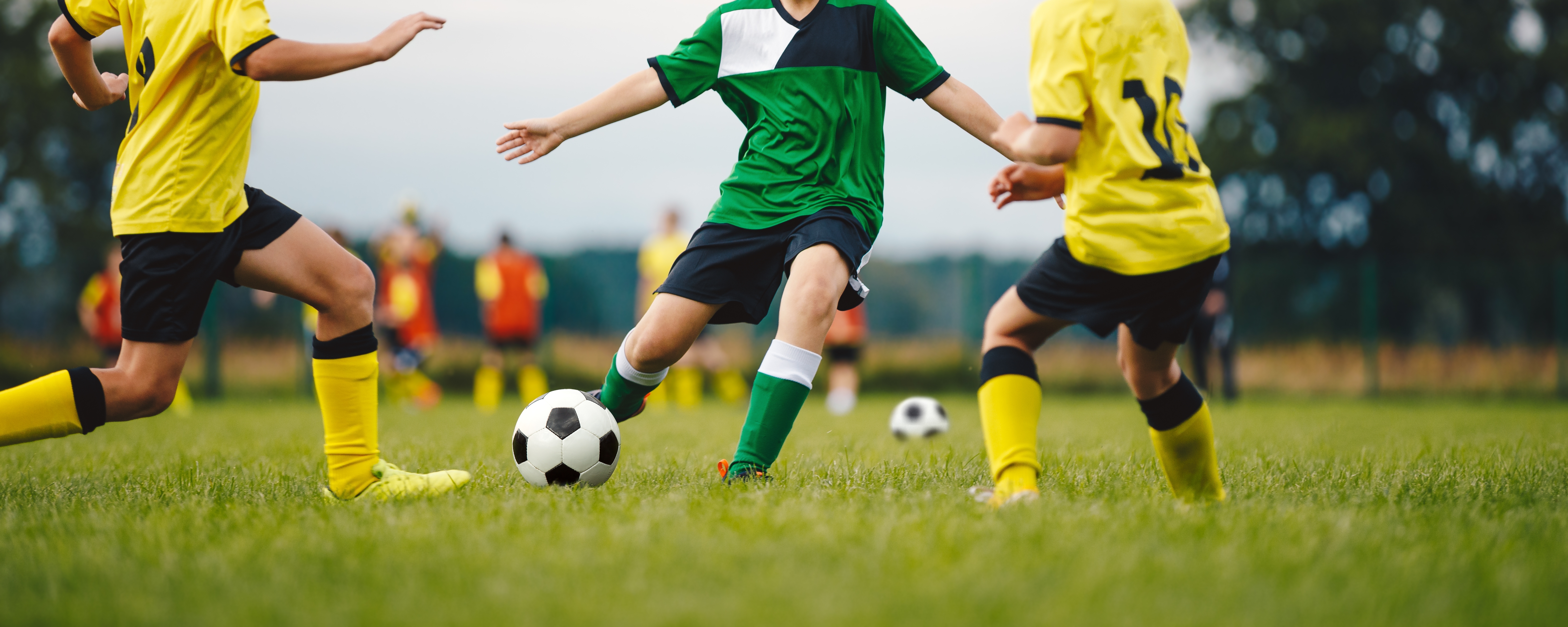
Fall sports keep young athletes across Maryland moving. Whether your child plays soccer, football, field hockey, or another fast-paced sport, strong vision involves much more than simply seeing clearly. Athletes also rely on depth perception (judging how far away an object or another player is), tracking (following a moving object smoothly with the eyes), eye teaming (both eyes aiming at the same point together), and visual processing (how the brain makes sense of what the eyes see) to react quickly and accurately. At The Center for Vision Development, we use individualized vision therapy to help strengthen visual skills that can affect both everyday activities and athletic performance.
Why Visual Skills Matter in Youth Sports
During sports, the eyes and brain must constantly work together. A player may need to track a moving ball, judge how far away another player is, shift focus between near and far objects, and coordinate a physical response within seconds. In many sports, vision leads and the body follows; if the visual information arrives late or inaccurately, even a well-practiced athlete will be a step behind.
Certain visual difficulties may make these tasks harder. Signs parents or coaches might notice include:
- Frequently missing or misjudging a ball
- Difficulty tracking fast-moving objects
- Poor timing when catching, hitting, or kicking
- Trouble judging distances or positions on the field
- Losing visual focus during fast-paced play
- Flinching or turning away from an incoming ball
- Bumping into other players or seeming clumsy compared to teammates
These challenges do not necessarily mean a child has poor eyesight. A young athlete can have clear 20/20 vision while still struggling with how efficiently the eyes and brain work together. The same visual skills also support reading, copying from the board, and other classroom tasks, so a child who struggles on the field may be working harder than expected at school as well.
How Vision Therapy Supports Hand-Eye Coordination
Hand-eye coordination requires the visual system to identify where an object is, follow its movement, and help the body respond appropriately. When tracking or eye teaming skills are inefficient, an athlete may have more difficulty reacting accurately.
Vision therapy uses prescribed activities designed to strengthen specific areas of visual function. Depending on the individual, therapy may work on tracking, focusing, eye teaming, peripheral awareness (noticing movement and objects off to the side while looking straight ahead), and other visual abilities that support coordinated movement. Our programs are individualized based on each patient's visual needs rather than taking a one-size-fits-all approach. Many activities feel like games, which keeps young athletes engaged while they build these skills. As these skills develop through the program, many athletes find it easier to time their movements, follow the ball, and stay aware of what is happening around them on the field.
Improving Depth Perception for Sports
Depth perception helps athletes understand where objects are positioned in three-dimensional space. It is important for judging the speed and distance of a ball, anticipating where another player is moving, or determining how far away a target may be.
Each eye sees the world from a slightly different angle, and the brain combines these two views into a single three-dimensional image. When the eyes do not team together efficiently, the brain receives less reliable information, and judging distance becomes harder. Vision therapy may help improve how effectively both eyes work together, supporting more efficient visual processing during athletic activities.
Concussions, Contact Sports, and Vision
Fall is also the season when many young athletes experience concussions. Vision is often affected after a head injury, even when other symptoms improve. Signs to watch for include blurred or double vision, sensitivity to light, headaches with reading or screen use, dizziness in busy environments, and difficulty concentrating in class. A neuro-vision evaluation in the early weeks after an injury can help identify these problems and guide a safe return to school and sports, in coordination with your child's physician.
When Should Your Young Athlete Have a Vision Evaluation?
If your child struggles with tracking, depth perception, coordination, or visually demanding activities despite having clear eyesight, a developmental vision evaluation can look beyond standard visual acuity (how clearly your child can see letters on an eye chart). We can evaluate how the eyes focus, track, team together, and process visual information to determine whether vision therapy may be appropriate. If your child has recently had a concussion, an evaluation can also help determine whether vision is contributing to lingering symptoms.
To schedule a vision evaluation, or to ask whether vision may be affecting your young athlete's performance or recovery, please call our Annapolis office at (410) 268-4393. Our team is happy to answer your questions.
Quick Links

Patient Center
Learn More
Keep
In Touch


Treatments
Contact Info
Hours of Operation
- Monday 10:00am – 6:00pm
- Tuesday 8:00am – 6:00pm
- Wednesday 8:00am – 6:00pm
- Thursday 8:00am – 6:00pm
- Friday 10:00am - 4:00pm
- Saturday 8:00am – 4:00pm
- Sunday Closed
© 2026 The Center for Vision Development. All rights Reserved. Accessibility Statement - Privacy Policy - Sitemap
Powered by: